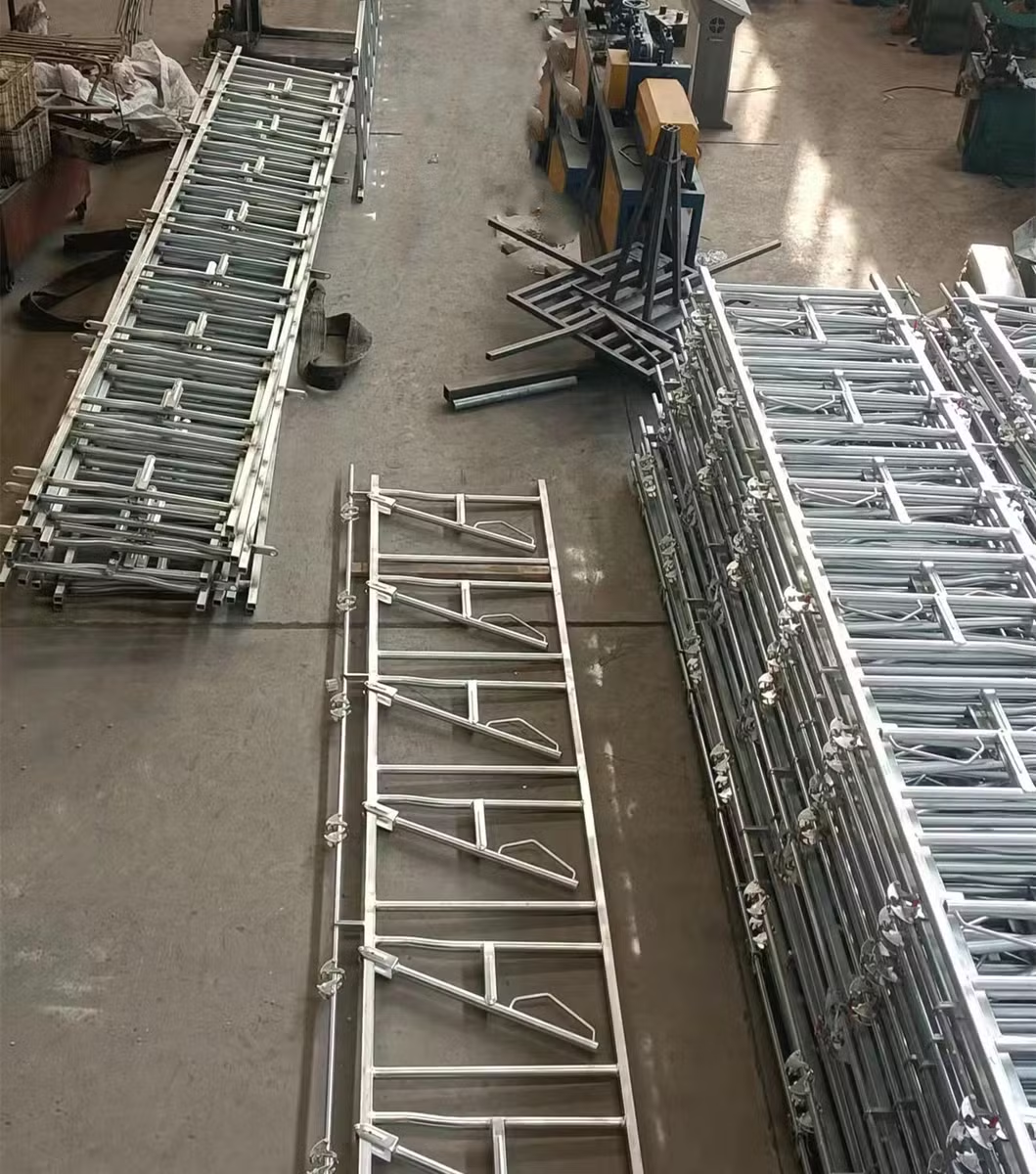
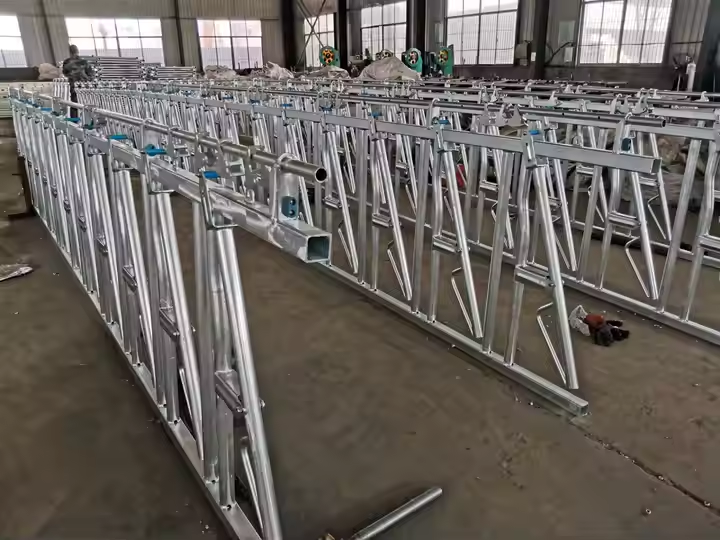
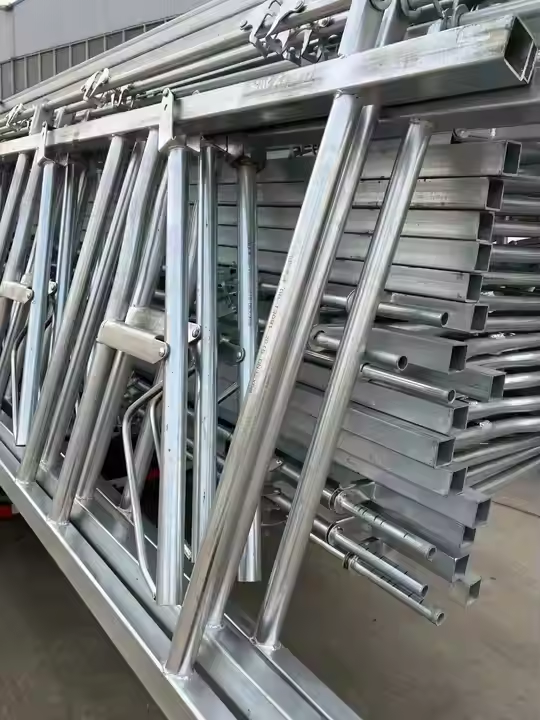
cattle head lock
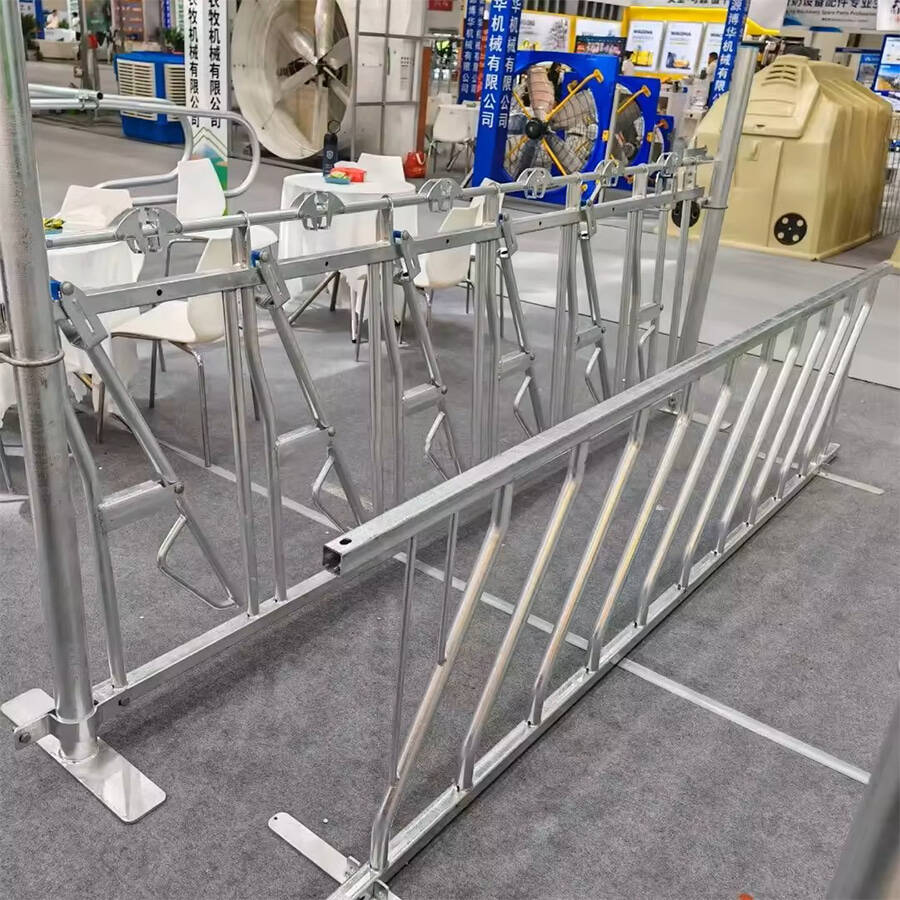
The cattle head lock represents a revolutionary advancement in livestock management technology, designed specifically to enhance the safety and efficiency of cattle handling operations across various agricultural settings. This innovative restraint system serves multiple critical functions in modern farming, veterinary practices, and livestock processing facilities. The primary purpose of a cattle head lock involves securely restraining cattle during essential procedures such as medical examinations, vaccinations, hoof trimming, artificial insemination, and routine health checks. The device operates through a sophisticated mechanism that gently but firmly holds the animal's head and neck in a controlled position, preventing sudden movements that could endanger both the livestock and handlers. Modern cattle head lock systems incorporate advanced engineering principles, featuring adjustable components that accommodate different cattle sizes and breeds. The technological framework includes heavy-duty steel construction with corrosion-resistant coatings, ensuring long-term durability in harsh agricultural environments. Many contemporary models integrate pneumatic or hydraulic operating systems, allowing for smooth, consistent operation with minimal physical effort from operators. Safety mechanisms are built into every cattle head lock design, including quick-release features that enable immediate animal liberation in emergency situations. The applications for cattle head lock systems extend beyond basic restraint functions. In veterinary settings, these devices facilitate precise medical procedures by maintaining animal stability during treatments. Large-scale farming operations utilize cattle head lock systems in feeding areas, allowing controlled access to feed while preventing aggressive behavior between animals. Processing facilities employ these systems during pre-slaughter inspections and humane handling procedures. The cattle head lock has become indispensable in artificial insemination programs, providing the stability necessary for successful breeding procedures. Research facilities also rely on cattle head lock technology for behavioral studies and data collection activities. Educational institutions use these systems for teaching proper animal handling techniques to veterinary and agricultural students.
 EN
EN