 EN
EN


Modern pig farming operations face unprecedented challenges as they expand to meet growing global protein demand. One of the most critical issues emerging in large-scale facilities is maintaining feeding accuracy across thousands of animals. When farms scale up from hundreds to thousands of pigs, traditional feeding methods often fail to deliver the precision required for optimal growth rates and feed conversion efficiency. This challenge has prompted many operations to seek advanced solutions that can maintain accuracy while handling massive throughput requirements.
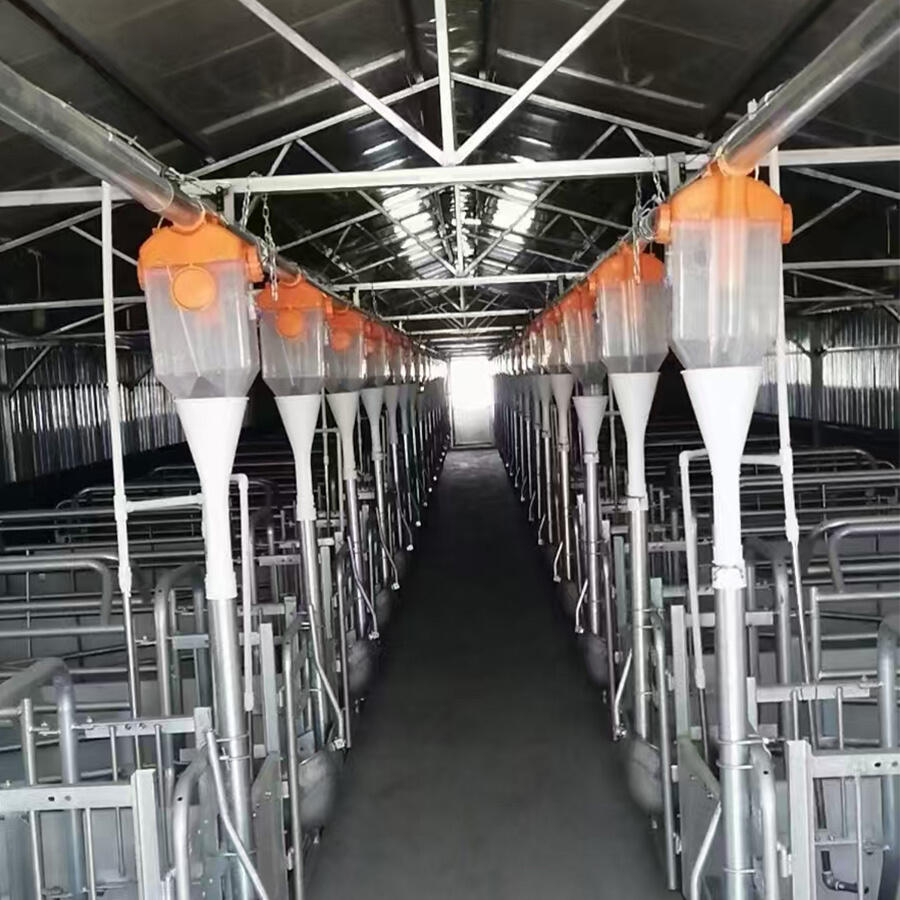
The Mathematics of Scale in Swine Nutrition
Feed Distribution Complexity
As pig farms expand beyond 5,000 head capacity, the mathematical complexity of feed distribution increases exponentially rather than linearly. Each additional feeding point introduces new variables that affect overall system accuracy. Traditional gravity-fed systems that worked adequately for smaller operations begin showing significant variance in delivery amounts when extended across multiple barns and feeding circuits.
The challenge intensifies when considering that different growth phases require precisely calibrated nutrition ratios. Nursery pigs need different feed compositions compared to finishing hogs, and any cross-contamination or inaccurate portioning can result in substantial economic losses. Large-scale operations must deliver exact amounts to specific groups while maintaining consistent flow rates across extensive distribution networks.
Cumulative Error Amplification
Small measurement errors that might be negligible in smaller operations become magnified problems at scale. A one percent variance in feed delivery might represent a few pounds in a 200-pig operation, but the same percentage error in a 20,000-head facility translates to thousands of pounds of wasted or insufficient feed daily. This amplification effect makes precision feeding systems essential rather than optional for large operations.
Feed conversion ratios directly impact profitability, with even minor improvements yielding substantial returns when multiplied across thousands of animals. An automatic feeding line system addresses these challenges by maintaining consistent accuracy regardless of farm size, ensuring each animal receives precisely measured nutrition portions throughout their growth cycle.
Infrastructure Limitations in Expanding Operations
Physical Distribution Challenges
Large-scale pig operations often span multiple buildings across extensive acreage, creating significant challenges for feed distribution systems. Traditional pneumatic and auger systems struggle with pressure drops and mechanical wear when extended over long distances. These physical limitations result in inconsistent feed delivery rates between buildings, with animals in distant structures often receiving inadequate nutrition compared to those closer to feed storage areas.
Gravity-fed systems face additional complications in large facilities where elevation changes and long horizontal runs affect flow consistency. Feed segregation becomes problematic over extended distances, with finer particles settling out while larger components continue flowing. This segregation creates nutritional imbalances that compound across the feeding network, making it impossible to guarantee consistent feed quality at every delivery point.
System Maintenance Complexity
Maintaining feeding accuracy across expansive operations requires sophisticated monitoring and adjustment protocols that exceed the capabilities of traditional systems. Manual calibration becomes impractical when dealing with dozens of feeding circuits serving thousands of animals. Regular maintenance schedules must account for increased component wear from higher throughput demands, yet downtime for maintenance directly impacts animal welfare and growth performance.
Modern automatic feeding line system technology addresses these infrastructure challenges through modular design principles that maintain accuracy regardless of system size. Advanced monitoring capabilities enable real-time adjustments and predictive maintenance scheduling, ensuring consistent performance across entire operations without requiring extensive manual intervention.
Economic Impact of Feeding Inaccuracies
Feed Cost Optimization
Feed typically represents 60-70% of total production costs in pig farming operations, making accurate delivery crucial for economic viability. Overfeeding wastes expensive ingredients while underfeeding reduces growth rates and extends time to market. Large-scale operations amplify these economic impacts, where a small percentage of waste or inefficiency translates to hundreds of thousands of dollars in lost profits annually.
Precise feed management becomes even more critical when using specialized diets formulated for specific growth phases or genetic lines. Premium ingredients like amino acid supplements and vitamins represent significant investments that must be delivered accurately to achieve intended nutritional benefits. Inaccurate portioning dilutes the effectiveness of these expensive additives while failing to optimize genetic potential.
Production Efficiency Metrics
Large-scale pig operations rely heavily on consistent performance metrics to maintain profitability targets. Feeding inaccuracies create variable growth rates within groups, resulting in uneven market weights and extended production cycles. This variability forces operations to hold lighter animals longer while heavier animals exceed optimal market weights, reducing overall efficiency and profit margins.
Feed conversion ratios serve as primary indicators of operational efficiency, with industry leaders achieving ratios below 2.5:1 in finishing operations. Maintaining these performance levels requires precision feeding systems that deliver exact amounts based on animal weight and growth stage. Automatic feeding line system technology enables large operations to achieve these efficiency targets consistently across their entire production network.
Technology Solutions for Scale Challenges
Precision Measurement Systems
Modern precision feeding systems utilize advanced weighing technologies and flow sensors to maintain accuracy regardless of system size or complexity. Load cells and digital scales provide real-time feedback on delivery amounts, enabling immediate adjustments to maintain target feeding rates. These systems eliminate the guesswork associated with traditional volumetric feeding methods, ensuring consistent nutrition delivery across entire operations.
Integration with farm management software allows automatic feeding line system technology to adjust portions based on individual pen requirements, growth phases, and feed inventory levels. This integration eliminates human error while optimizing feed utilization across different groups simultaneously. Automated record-keeping provides detailed tracking of feed consumption patterns, enabling data-driven decisions for future optimization.
Smart Distribution Networks
Advanced feeding systems incorporate intelligent routing capabilities that optimize feed distribution across complex facility layouts. Multiple feed types can be routed simultaneously through separate circuits, preventing cross-contamination while maintaining delivery accuracy. Smart valving systems direct specific feed formulations to designated areas based on programmed schedules and animal requirements.
Remote monitoring capabilities enable operators to oversee entire feeding operations from centralized control points, reducing labor requirements while maintaining oversight of system performance. Real-time alerts notify operators of potential issues before they impact animal welfare or feeding accuracy. This proactive approach to system management ensures consistent performance even as operations continue expanding their capacity.
Implementation Strategies for Large Operations
Phased System Deployment
Successful implementation of precision feeding systems in large operations typically follows a phased approach that minimizes disruption to ongoing production. Initial deployment focuses on critical areas where feeding accuracy provides maximum return on investment, such as nursery facilities where precise nutrition is essential for early development. This staged approach allows operations to validate system performance while building operational expertise.
Each phase provides valuable data on system performance and optimization opportunities that inform subsequent installations. Lessons learned during initial deployment help refine installation procedures and training protocols for later phases. This iterative approach ensures that the final automatic feeding line system configuration meets specific operational requirements while maximizing return on investment.
Staff Training and System Integration
Successful deployment of advanced feeding systems requires comprehensive training programs that prepare staff for new operational procedures and maintenance requirements. Training must cover both routine operations and troubleshooting procedures to ensure consistent system performance. Operations that invest adequately in staff training typically achieve better long-term results from their feeding system investments.
Integration with existing farm management systems enables seamless data flow between feeding operations and other production metrics. This integration provides comprehensive visibility into how feeding accuracy affects overall production performance. Automated reporting capabilities help identify optimization opportunities while documenting regulatory compliance requirements for feed safety and traceability.
Future Trends in Precision Feeding
Artificial Intelligence Integration
Emerging artificial intelligence technologies promise to revolutionize feeding accuracy in large-scale pig operations through predictive algorithms that anticipate feeding requirements based on historical patterns and real-time conditions. Machine learning systems analyze vast datasets to identify optimal feeding schedules and portion sizes that maximize growth efficiency while minimizing waste. These systems continuously improve their accuracy through ongoing data analysis and performance feedback.
AI-powered feeding systems can detect subtle changes in consumption patterns that indicate health issues or environmental stress before they become apparent to human observers. Early intervention capabilities help prevent production losses while maintaining animal welfare standards. The integration of artificial intelligence with automatic feeding line system technology represents the next evolution in precision agriculture applications for livestock production.
Sustainability and Environmental Considerations
Future feeding systems will incorporate sustainability metrics alongside production efficiency measures, optimizing feed utilization to minimize environmental impact. Precision feeding reduces nitrogen excretion by matching amino acid delivery to actual animal requirements. This optimization helps large operations meet increasingly stringent environmental regulations while maintaining profitability.
Carbon footprint reduction becomes increasingly important as consumers and regulators demand more sustainable protein production methods. Precise feed management reduces overall resource consumption while improving conversion efficiency. Advanced feeding systems enable large operations to document their sustainability improvements while maintaining competitive production costs through improved efficiency.
FAQ
How does farm size affect feeding accuracy requirements
Feeding accuracy requirements become exponentially more critical as farm size increases because small percentage errors multiply across thousands of animals. A 2% overfeeding error in a 1000-head operation wastes approximately 40 pounds of feed daily, while the same error in a 20,000-head facility wastes 800 pounds daily. Large operations require precision feeding systems that maintain accuracy regardless of scale to control feed costs and optimize production efficiency.
What are the main challenges when upgrading traditional feeding systems
The primary challenges include integrating new technology with existing infrastructure, training staff on advanced system operations, and managing the transition without disrupting ongoing production. Many operations choose phased implementation approaches that allow gradual system deployment while maintaining production continuity. Proper planning and professional installation help minimize disruption while ensuring optimal system performance from the beginning.
How quickly do large operations see return on investment from precision feeding systems
Most large-scale operations achieve positive return on investment within 18-24 months through improved feed conversion efficiency and reduced waste. Feed cost savings typically range from 5-10% annually, while improved growth consistency reduces labor costs and marketing inefficiencies. Operations with over 10,000 head capacity often see faster payback periods due to the scale advantages of precision feeding technology investments.
Can existing buildings accommodate modern automatic feeding systems
Most existing pig facilities can accommodate modern automatic feeding line system installations with minimal structural modifications. Advanced systems are designed for flexible installation in various building configurations and can often utilize existing feed storage and distribution infrastructure. Professional system designers evaluate each facility individually to develop optimal installation plans that maximize performance while minimizing construction requirements and associated costs.