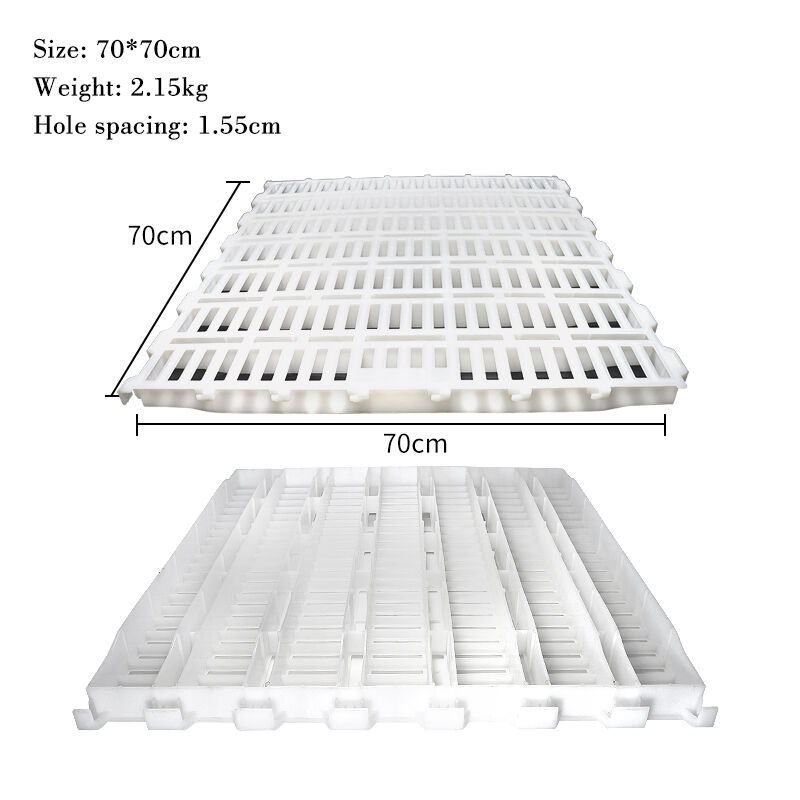
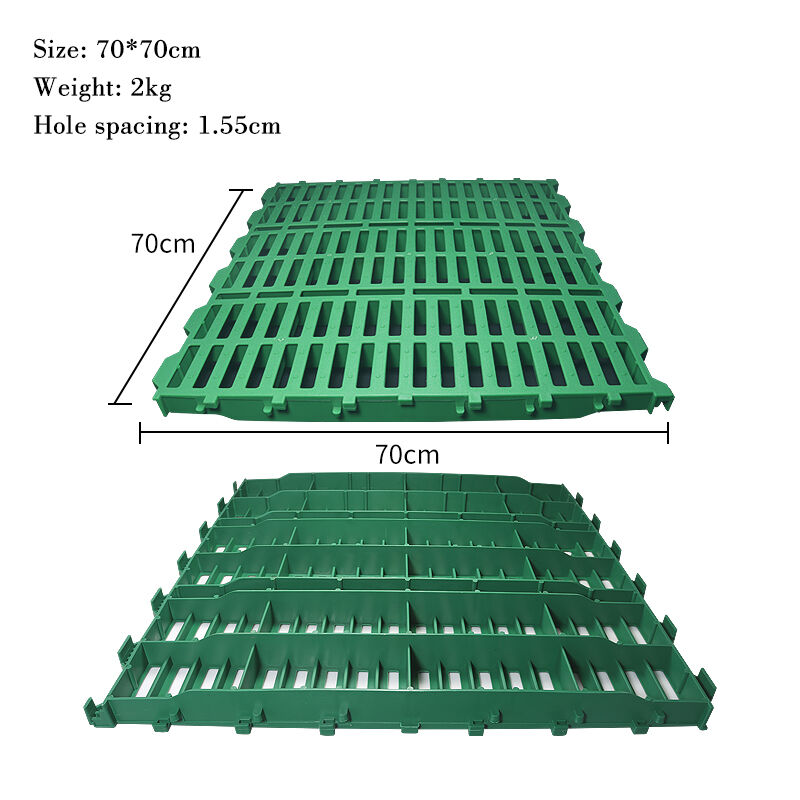
the goat slat floor
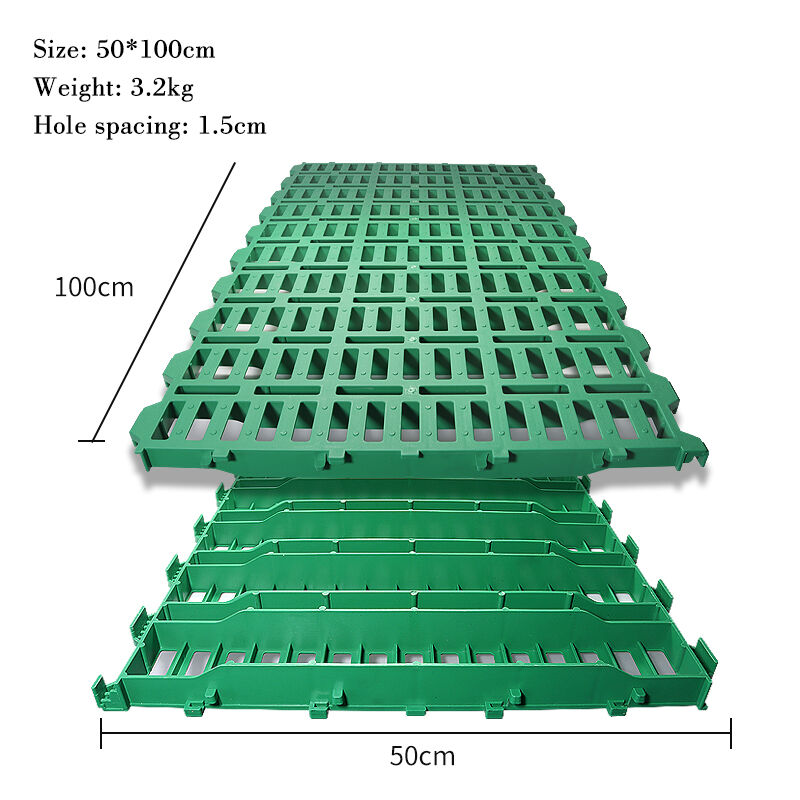
The goat slat floor represents a revolutionary advancement in modern livestock management, specifically designed to enhance the health, comfort, and productivity of goat farming operations. This innovative flooring system consists of carefully engineered slats that provide optimal spacing and drainage while maintaining structural integrity for goat housing facilities. The goat slat floor system utilizes precision-manufactured materials, typically constructed from durable concrete, plastic composites, or metal alloys that withstand the demanding conditions of agricultural environments. Each slat is strategically positioned to create gaps that allow waste materials to fall through while providing secure footing for goats of various sizes and ages. The technological features of the goat slat floor include anti-slip surface textures that prevent accidents and injuries, ensuring goats can move confidently across the surface. The spacing between slats is calculated based on extensive research into goat hoof dimensions and movement patterns, preventing hoof entrapment while maximizing waste removal efficiency. Modern goat slat floor systems incorporate drainage channels and waste management integration, allowing for automated cleaning systems that reduce labor requirements and improve sanitation standards. The applications of goat slat floor technology extend across commercial dairy operations, breeding facilities, and small-scale farm installations. These systems are particularly beneficial in intensive farming environments where space optimization and hygiene control are critical factors. The goat slat floor design accommodates various housing configurations, including elevated pens, barn installations, and outdoor paddock areas. Installation flexibility allows farmers to retrofit existing structures or incorporate the system into new construction projects. The modular nature of many goat slat floor systems enables customization based on facility size, goat population, and specific operational requirements, making this technology accessible to farming operations of all scales.
 EN
EN