EN
EN


Can veterinary B-mode ultrasound machines be used on humans?
After the company recently delivered a batch of veterinary B-mode ultrasound machines to a Slovakian client, team members noticed an interesting question when viewing the product's actual test images: Since such B-mode ultrasound machines can be used on mammals like cows and pigs, can they also be used on humans? The answer is clear—absolutely not.
First, let's look at the application scope of veterinary B-mode ultrasound machines. In fact, they have a quite wide range of applications and are important equipment in livestock production and animal healthcare. In the breeding of livestock such as pigs, cows, sheep, and horses, they can accurately assist in reproductive management. For example, they can quickly conduct early pregnancy diagnosis to avoid excessively long non-pregnant periods; clearly identify multiple pregnancies to help breeders plan feeding schemes in advance; and monitor follicular development to accurately grasp the timing of breeding, thereby improving the conception rate. In the field of meat quality improvement, they can measure the backfat thickness and eye muscle area of livestock and poultry, providing data support for breed selection and feed formula optimization, and helping to produce higher-quality meat products. In terms of animal disease prevention and control, they can detect reproductive system diseases such as pyometra and ovarian cysts, and also assist in diagnosing lesions in internal organs like the liver and kidneys to protect animal health. Even in the healthcare of pets such as dogs and cats, they are often used for pregnancy monitoring and disease diagnosis.
However, even though veterinary B-mode ultrasound machines are suitable for various mammals, they must never be used beyond their intended scope for human examinations. There are multiple key reasons behind this. From a technical perspective, the physiological structures and tissue densities of humans and animals differ significantly. The software algorithms and measurement parameters of veterinary B-mode ultrasound machines are designed for specific animals. For instance, the calculation formula for fetal development in cows is completely inapplicable to human fetuses; the ultrasound frequency used for measuring the backfat of pigs may fail to clearly display the details of human internal organs during human examinations. Forced use will lead to severe data distortion, making the data unable to serve as a basis for medical judgment.
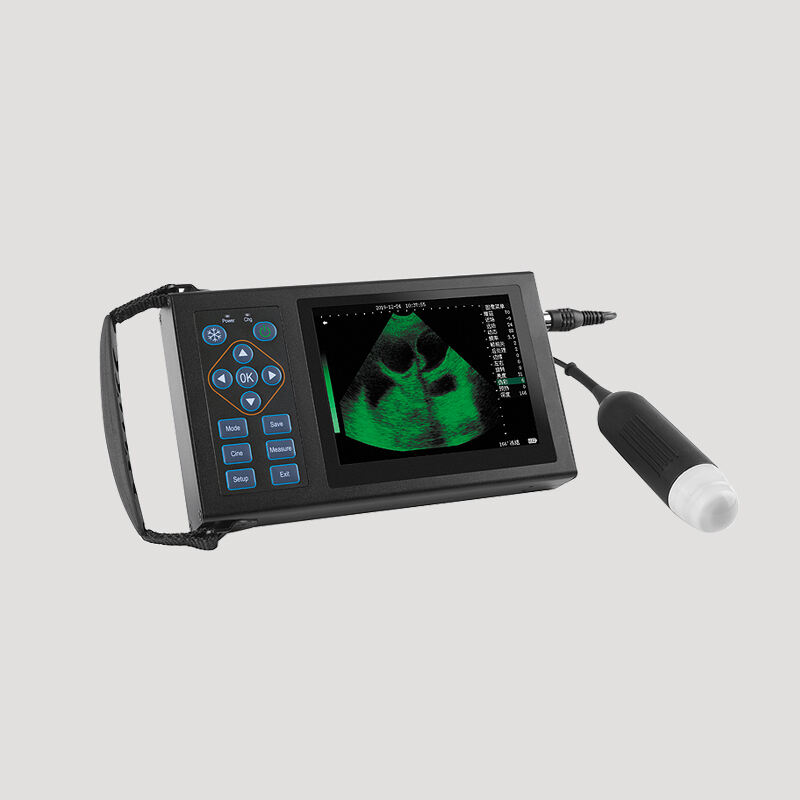
In terms of equipment design, human-use B-mode ultrasound machines emphasize stability and high-precision imaging. Most of them are fixed models, equipped with probes and operation interfaces that conform to ergonomics. In contrast, to adapt to the complex environment of farms, veterinary B-mode ultrasound machines are usually designed to be more compact and portable. Their probe frequencies, scanning depths, and other parameters are all set based on the needs of animal examinations, making it difficult for them to meet the precision requirements of human examinations.
More importantly, there are concerns regarding hygiene, safety, and legal regulations. The usage environments of veterinary B-mode ultrasound machines, such as farms and pet hospitals, may be contaminated with bacteria and viruses unique to animals (such as Brucella and foot-and-mouth disease viruses). These pathogens pose an infection risk to humans. Moreover, the cleaning and disinfection standards for veterinary equipment are completely different from those for medical equipment, so veterinary B-mode ultrasound machines cannot meet the hygiene requirements for human diagnosis and treatment. Meanwhile, in most countries and regions around the world, including Slovakia and China, using non-medical equipment for human medical examinations or having non-professionals operate medical examination equipment violates medical laws, regulations, and industry standards. This not only leads to legal penalties but may also cause delayed treatment due to misdiagnosis, posing serious harm to human health.
Therefore, if you have a need for health checks, you must go to a formal medical institution and have professional doctors conduct the examination using equipment that meets medical standards. This is not only a responsibility to your own health but also a basic requirement for abiding by laws and regulations. Under no circumstances should you attempt to use veterinary equipment for human examinations out of curiosity or for the sake of convenience.